The full shadow of a polynomial I. The limiting core and the transient set
with B. Shapiro. Preprint (2026), arXiv:2610.09602.
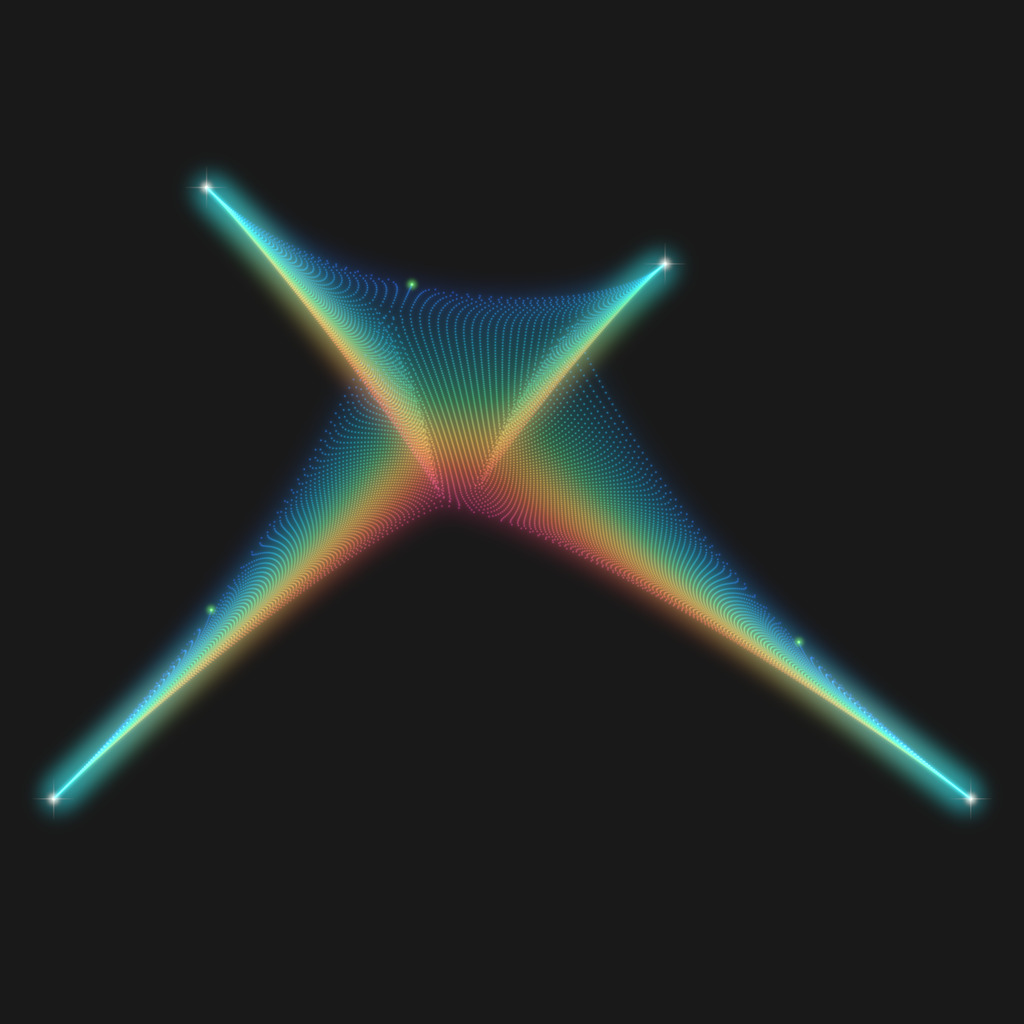
The zeros of all derivatives of all powers of a polynomial fill out a compact connected core, which contains every root and critical point and refines the convex hull in the Gauss-Lucas theorem. Outside the core there can only be isolated transient zeros, and some quartics have infinitely many of them.
![A glowing Möbius band made of the image lines of the matrix M = [[1+x, y], [y, 1−x]] over the unit circle: the Möbius line bundle that obstructs a Smith normal form.](https://christianhagg.com/wp-content/uploads/fig-bezout-mobius.jpg)
A Bézout domain that is not an elementary divisor domain
with A. Mörtberg. Preprint (2026), arXiv:2609.35229.
We answer a question of Helmer from 1943 by constructing a Bézout domain over which an explicit 2×2 matrix has no Smith normal form. The obstruction is topological and comes from the Möbius line bundle, and the proof has been formalized in Lean.
An Ellipse Criterion for Exact Nonuniqueness in the Planar Interior Radon Problem
Preprint (2026), arXiv:2608.29442.
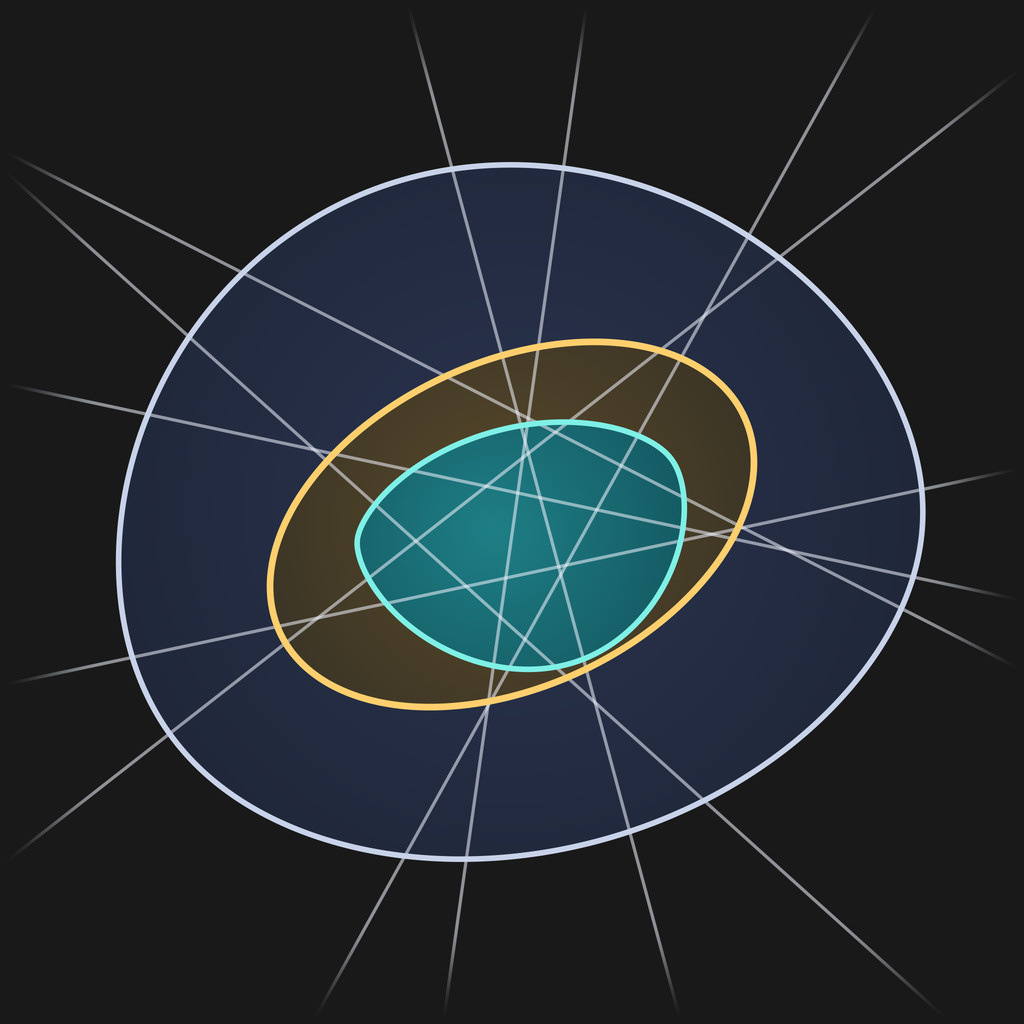
For two convex sets in the plane, we show that a nonzero function supported in the first can integrate to zero over every line meeting the second if and only if an ellipse fits between them. For concentric squares this gives the sharp ratio 1/√2, and it leads to counterexamples to a conjecture and a theorem of Boman.
Algebraic Cauchy transforms of real algebraic ovals
with B. Shapiro. Preprint (2026), arXiv:2606.06296.
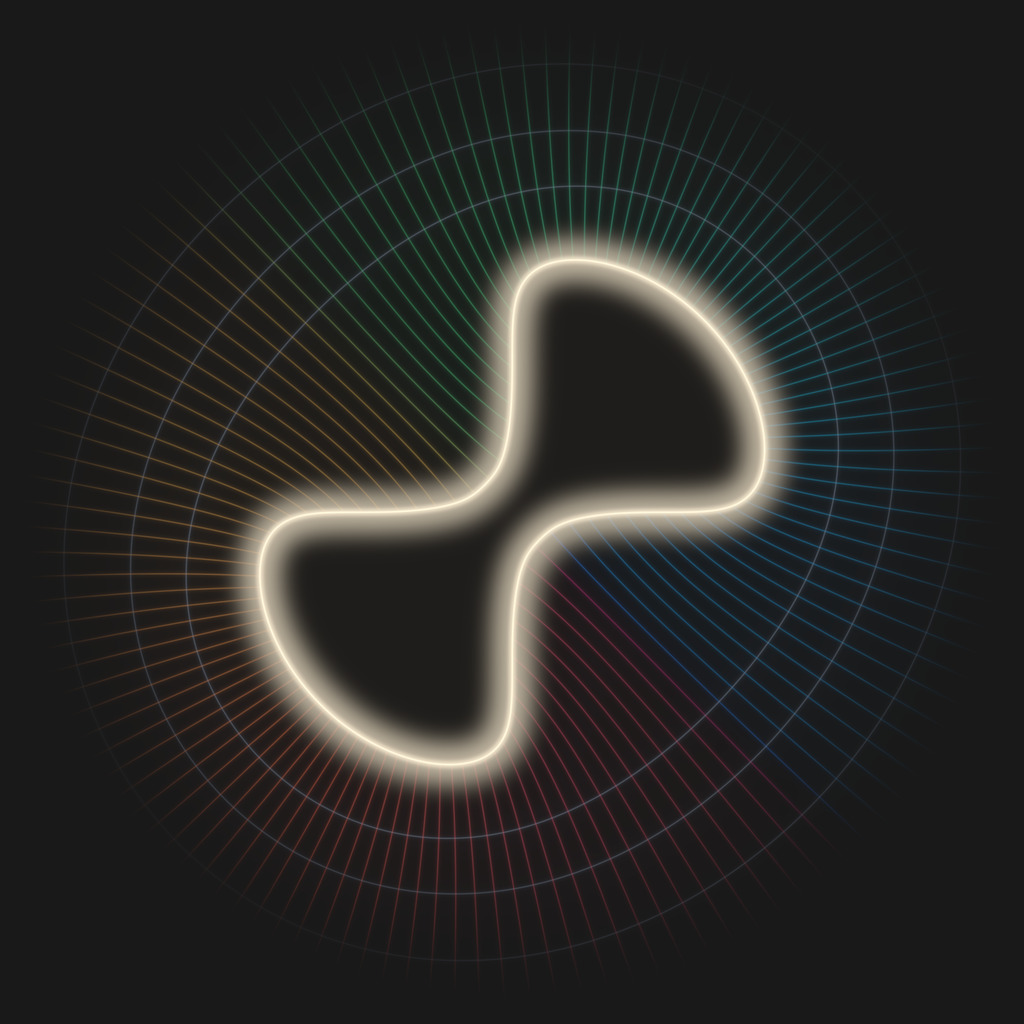
We show that the exterior Cauchy transform of a domain bounded by an oval of a real algebraic curve is algebraic exactly when the lifted oval separates the underlying Riemann surface, provided the monodromy is two-transitive. We also construct star-shaped domains whose transforms are algebraic but not rational, which goes beyond the classical quadrature domains.
Zero asymptotics for successive derivatives of hyperexponential functions with finite essential singularities
with B. Shapiro. Preprint (2026), arXiv:2604.09333.
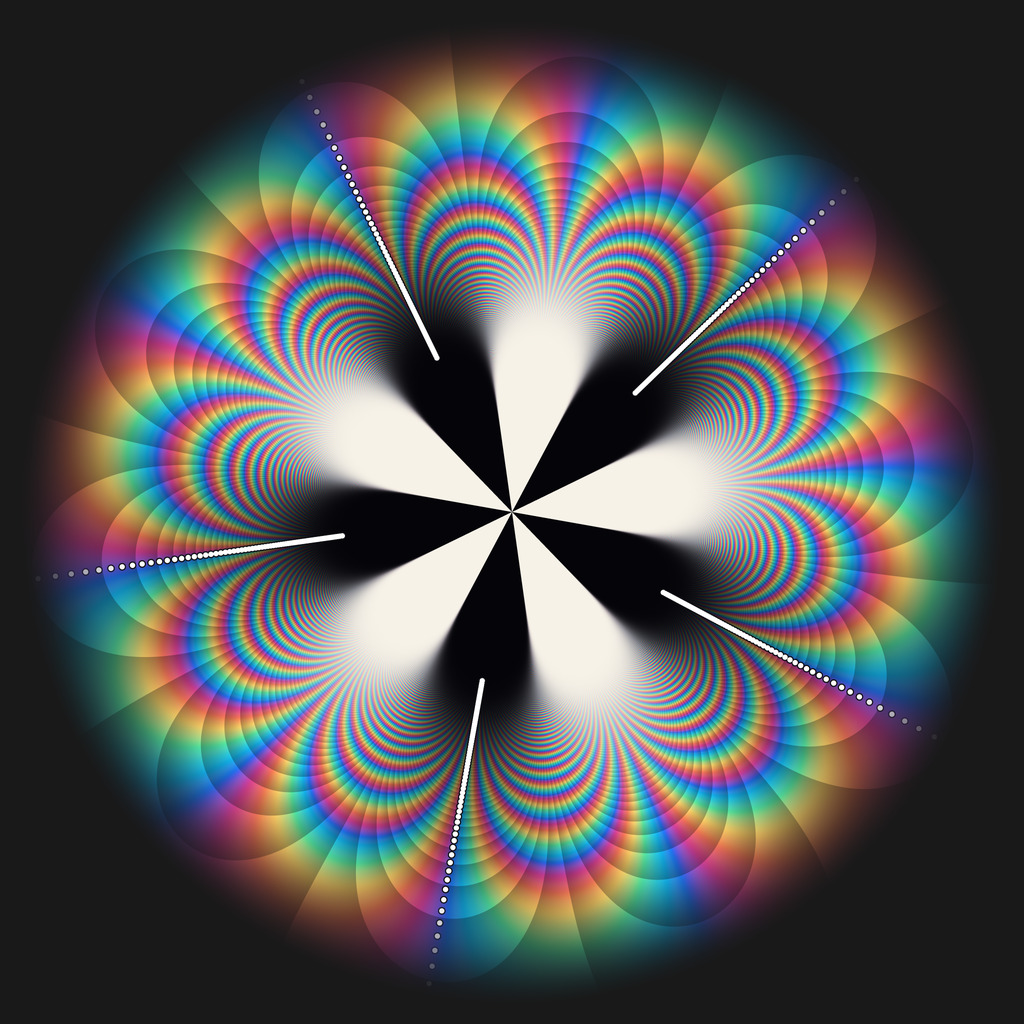
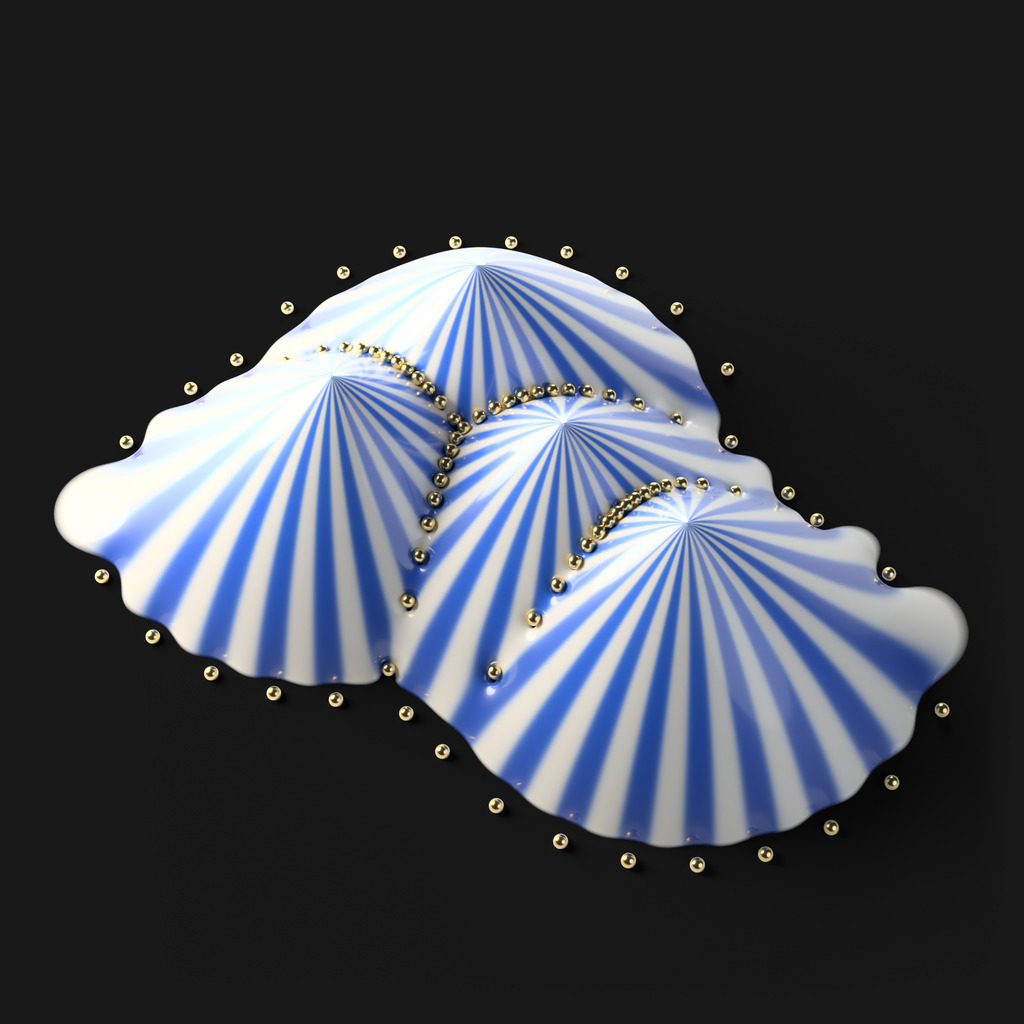
Pólya’s shire theorem places the limiting zeros of successive derivatives of a meromorphic function on the Voronoi diagram of its poles. We extend this picture to functions with essential singularities, which become additional Voronoi sites and attract clusters of zeros governed by the reciprocal Marchenko-Pastur law, or by Muttalib-Borodin laws for singularities of higher order.
Voronoi limit measures for iterates of constant-coefficient differential operators on rational functions with simple poles
with B. Nyandwi, C. Kurujyibwami and L. F. R. Uwimbabazi. Preprint (2026), arXiv:2604.05189.
Zeros of successive derivatives of a rational function with simple poles accumulate on the Voronoi diagram of the poles. We show that iterates of any constant-coefficient differential operator give the same limiting measure up to an explicit factor, with the remaining zeros escaping to infinity unless the operator is a pure power of D.
![The paper's two-dimensional benchmark function and the output of a trained 2→[5,8,5]→1 Sprecher network, with the learned shared splines φ (cyan) and Φ (magenta) of its three blocks.](https://christianhagg.com/wp-content/uploads/fig2-sprecher-networks.jpg)
Sprecher Networks: A Parameter-Efficient Kolmogorov-Arnold Architecture
with K. Kohn, G. L. Marchetti and B. Shapiro. Preprint (2025), arXiv:2512.19367.
Sprecher networks are trainable architectures based on David Sprecher’s 1965 constructive version of the Kolmogorov-Arnold representation theorem. Since each block uses only two shared splines, the number of parameters grows linearly with the width, and the models are small enough for real-time digit classification on an embedded device with 4 MB of RAM.
Introducing isodynamic points for binary forms and their ratios
with B. Shapiro and M. Shapiro. Complex Anal Synerg 9, 2 (2023).
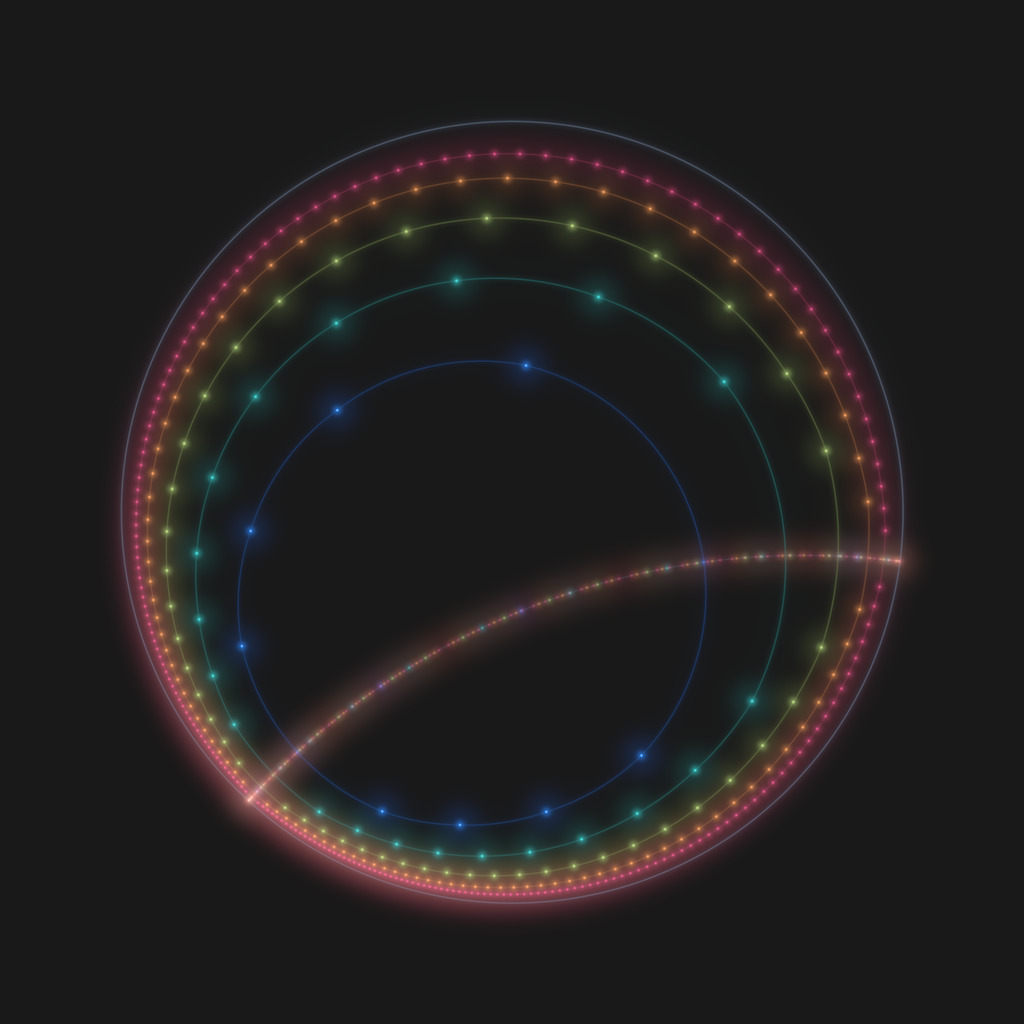
The isodynamic points are the only pair of triangle centers that are compatible with Möbius transformations. We extend them to polynomials of any degree d ≥ 3 through a Möbius-equivariant map to polynomials of degree at most 2d − 4, and further to binary forms and their ratios.
Rodrigues’ Descendants of a Polynomial and Boutroux Curves
with R. Bøgvad and B. Shapiro. Constr Approx (2023).
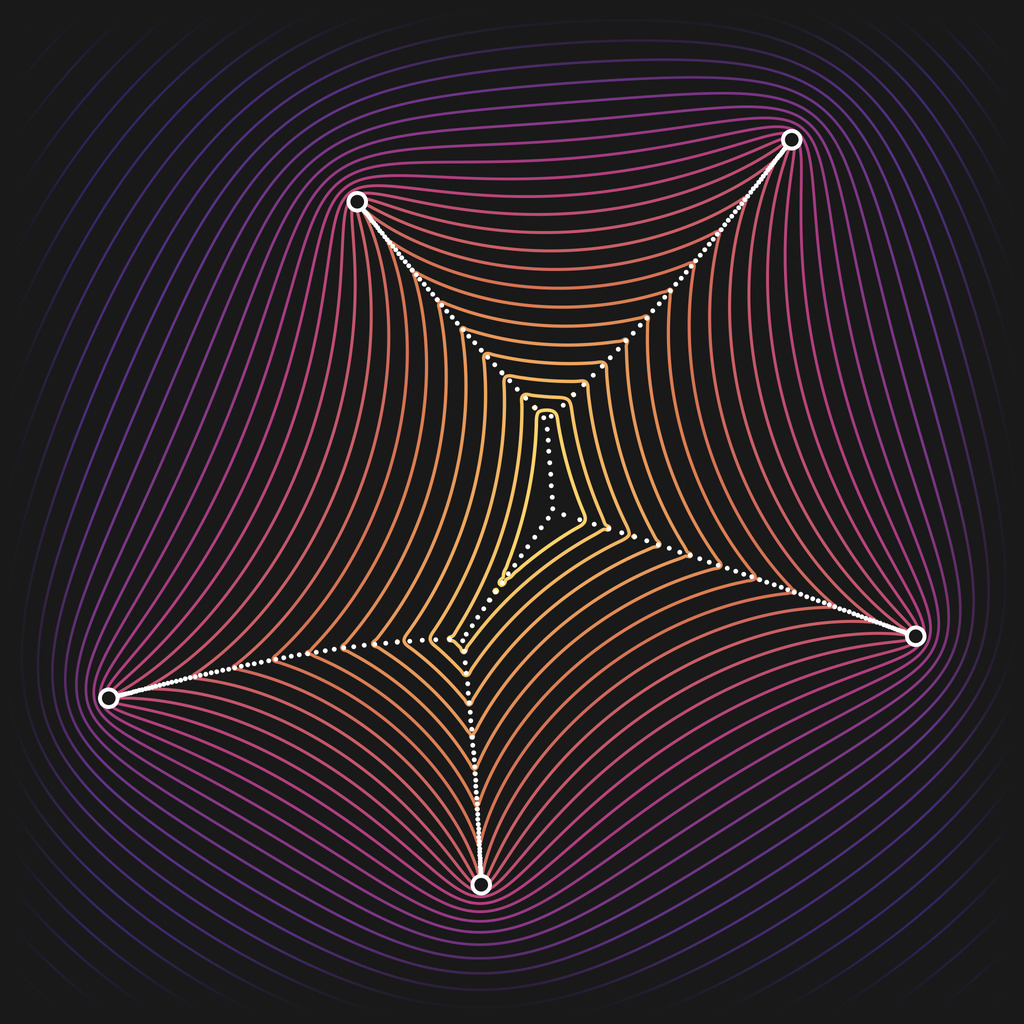
Rodrigues’ formula produces the Legendre polynomials by differentiating powers of x² − 1. We describe the asymptotic zero distribution when a power of an arbitrary polynomial is differentiated a proportional number of times, and the answer turns out to be governed by Boutroux curves.
The asymptotic zero-counting measure of iterated derivatives of a class of meromorphic functions
Arkiv för Matematik 57 (1), (2019), pp. 107-120.
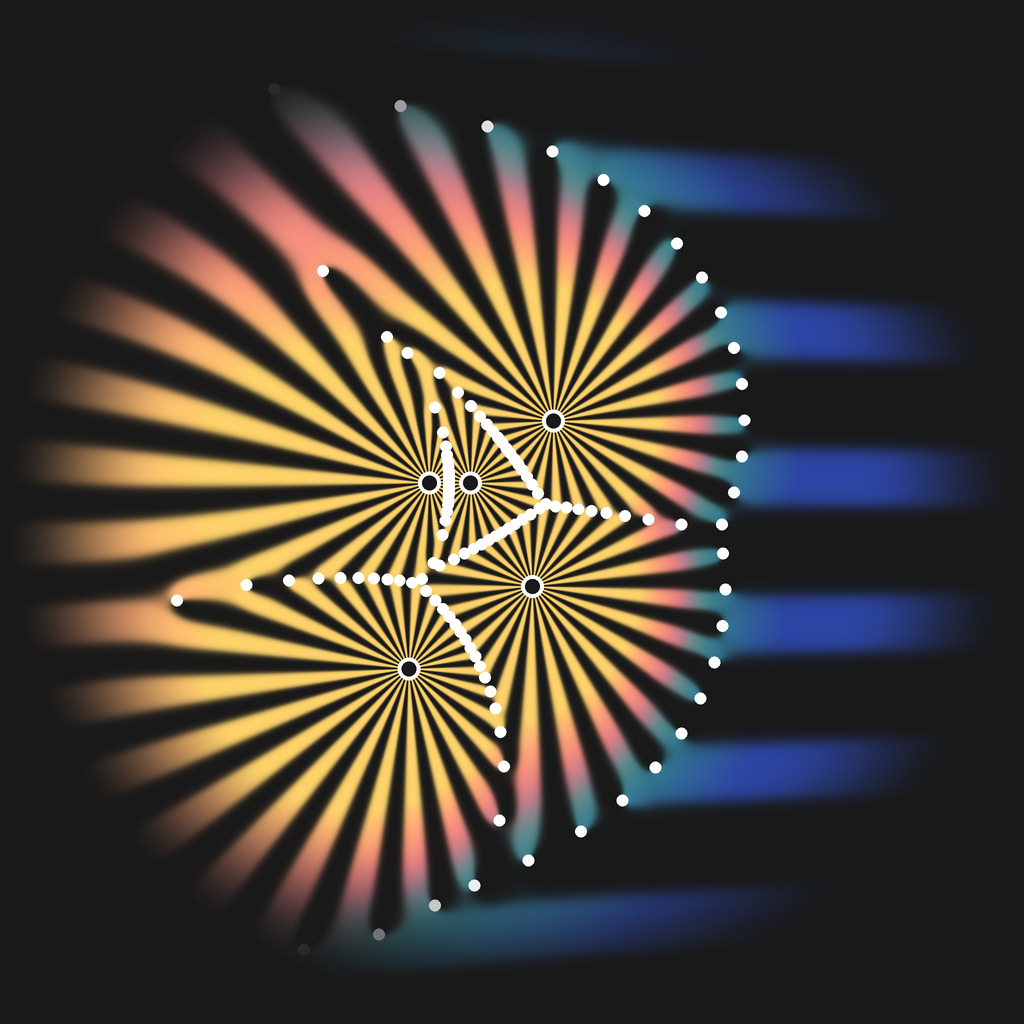
We give an explicit formula for the logarithmic potential of the limiting zero distribution of the derivatives of R(z)eT(z), where R is rational with simple poles and T is a polynomial. This extends the measure-theoretic refinement of Pólya’s shire theorem from rational functions to this class of meromorphic functions.
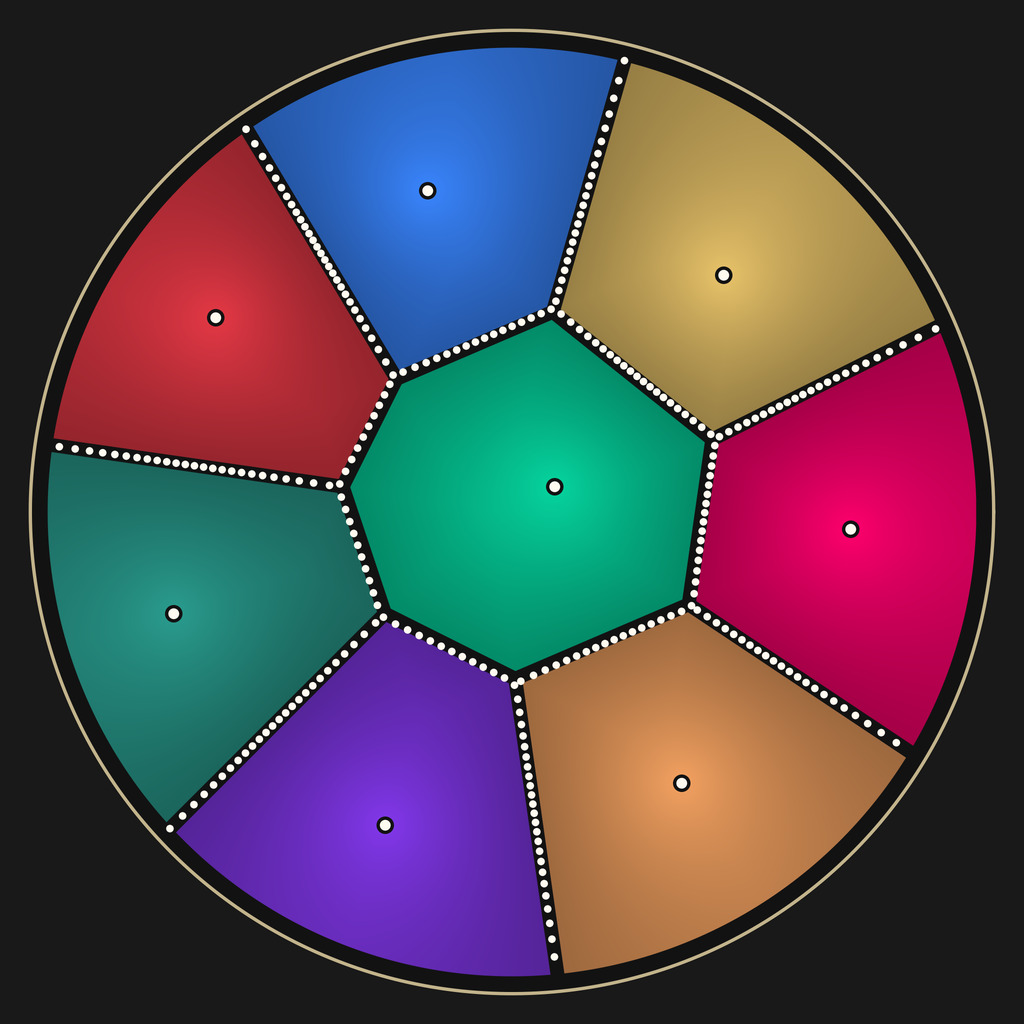
A refinement of Pólya’s method to construct Voronoi diagrams for rational functions
with R. Bøgvad. Journal of Mathematical Analysis and Applications 452 (1), (2017), pp. 312-334. arXiv:1610.00921
Pólya observed that the zeros of successive derivatives of a rational function accumulate on the Voronoi diagram of its poles. We determine their limiting distribution on the diagram explicitly, and prove an analogous result for generic hyperplane arrangements in ℂm using currents.